
I had to go to this building to see one of the specialist Orthodontists for a root canal. I was disappointed at the number of non-compliances observed.
Again, this post is for educational purposes, which is why I have not included its address.
Inaccessible Tenancy Entries

The majority of the tenancies have entries like this, with no minimum latch-side clearance. Under current standards, the minimum typically required is 470mm.
Inter-tenancy Doors

As with the entry doors, the majority of the tenancies have entries like this, with no minimum latch-side clearance.
Able-Bodied Toilet Signage

Signage does not include Braille, is not tactile and is not located on the latch side wall in accordance with BCA D3.6.
Accessible Toilet Signage

Signage does not include Braille or Male/Female pictograms for unisex WCs; it is not tactile and is not located on the latch-side wall in accordance with BCA D3.6.
The door has insufficient hinge clearance.
Main Entry Stair
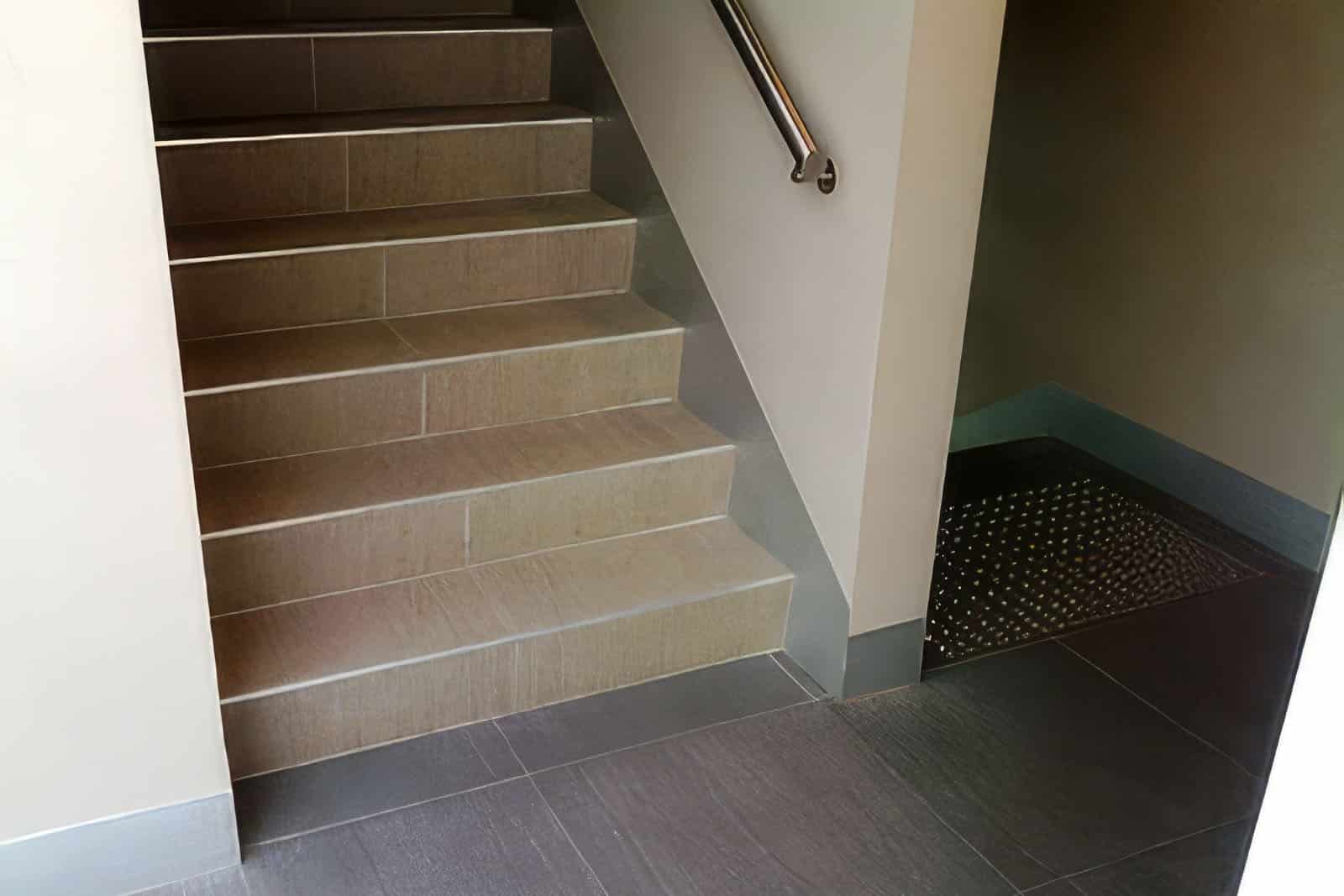

Whilst this stair does not have to be accessible because a lift is provided, it is located right at the entry to encourage its use.
Our Recommendation
It’s perplexing why TGSIs have been provided on the lower flight but not on the upper flight. They also do not extend to the full width of the accessible path of travel.
Contrasting non-slip nosings have not been provided.
Handrails have not been provided on both sides of the stairs and do not comply with AS1428.1-2001 Fig 17.
Full height glazing

All full height glazing must have a 75mm thick opaque contrasting line between 900mm – 1000mm in accordance with AS1428.1-2001 7.5.1.
Entry Stairs
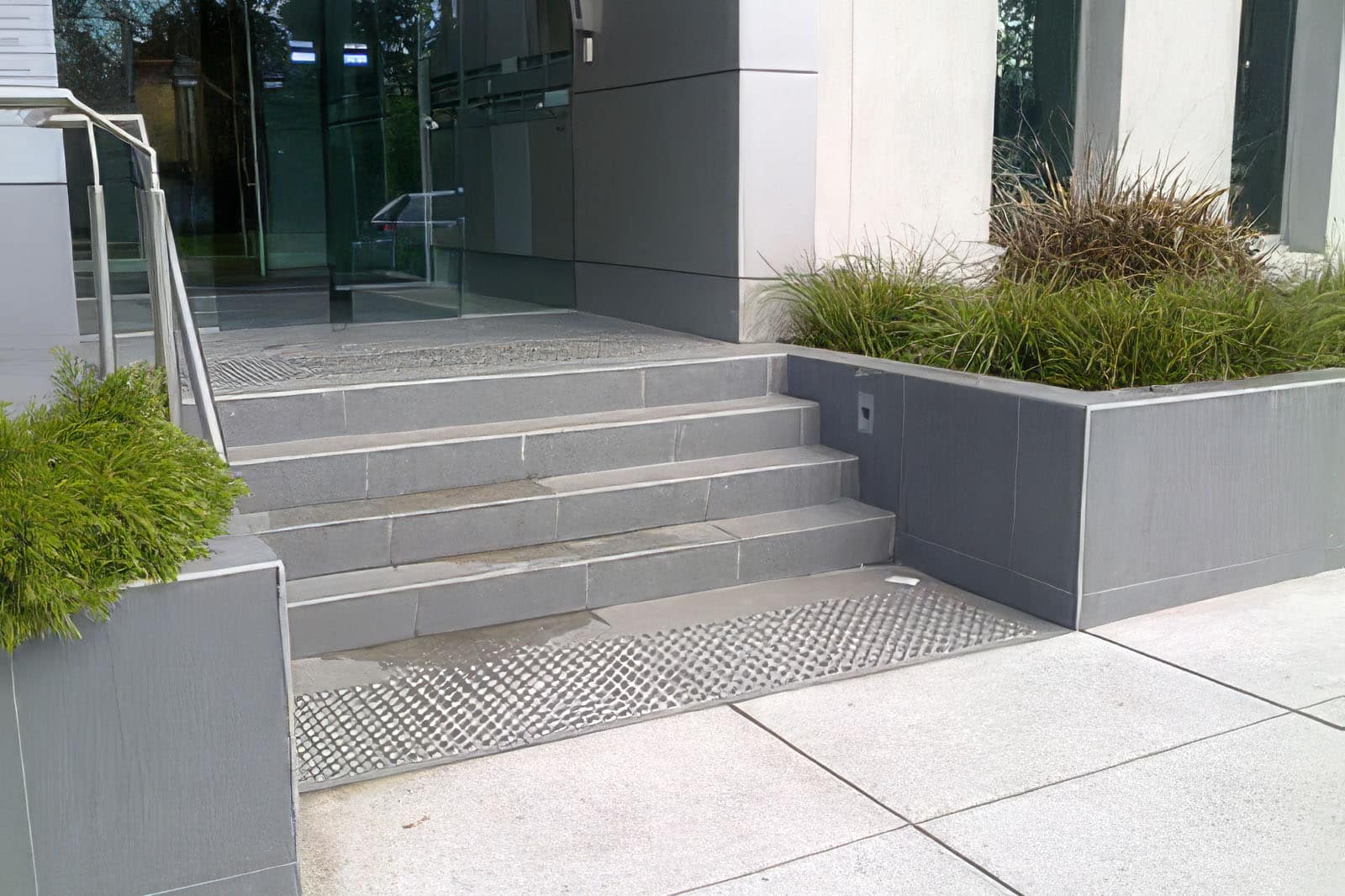

Handrails have not been provided on both sides of the stairs in accordance with AS1428.1-2001 9.2.
Handrails do not comply with AS1428.1-2001 Fig 17.
Ramp TGSIs

TGSIs have been provided on the intermediate landing. These are not required as the handrails are continuous.
Handrail Design

Handrail design does not comply with AS1428.1-2001 Fig 9.
Handrail mountings like this prevent the user from holding/ sliding their hand along the full length of it; in this case, fingers are impeded.
Interestingly, raised tactile domes have been provided on the handrails, which are not required. The only time domes are required is in aged care homes or hospitals where TGSIS are not provided, or when they are nominated as an alternative.