
This information has been prepared by Equal Access to provide guidance on access requirements to Class 1b boarding houses (or rooming houses).
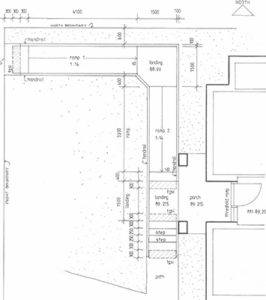 Equal Access has experience in the conversion of Class 1a houses to Class 1b’s for compliance, not only from an access perspective but also from Council enforcement and building permit perspectives. This experience positions our consultancy perfectly to provide accessibility advice when converting properties to boarding houses or rooming houses. We have intimate, practical experience and can assist at all stages of a Class 1b housing project. We know the building laws, disability laws and how the Council will assess any Class 1b building.
According to the 2025 survey by the Australian Bureau of Statistics, there are 5.5 million people in Australia with a disability, which equates to 21.45% of the population who could require accessible rental accommodation within the community.
A Class 1b building can be defined as one with a total floor area less than 300 m2 (measured over the enclosed or outer wall of the whole Class 1b building) and where not more than 12 people would ordinarily be resident. Any accommodation larger than this would usually be classified as a Class 3 building, such as a hotel, motel or backpackers.
On 1 May 2011, the Commonwealth Disability (Access to Premises – Buildings) Standards 2010 (Premises Standards) were introduced and adopted into the Building Code of Australia (BCA) and state-based legislation, including the Victorian Building Regulations 2018. The objectives of the Premises Standards are to ensure that “dignified, equitable, cost-effective and reasonably achievable access to buildings, and facilities and services within buildings, is provided for people with a disability“. The Premises Standards apply to new buildings and existing buildings being altered, including certain ‘specified’ Class 1b buildings, and set out clear parameters for access requirements. Prior to 1 May 2011, there were no prescriptive requirements within the building regulations (including previous versions of the BCA) for Class 1b buildings, but the lack of access to these buildings was (and still is) subject to complaints under the Disability Discrimination Act 1992 (DDA).
The application of the access provisions of the Premises Standards and BCA applies to ‘specified’ types of Class 1b buildings:
It is important to note that Class 1 b buildings that are not included in the above definition of a ‘specified’ Class 1 b building (i.e. with less than four dwellings on the same allotment or less than four bedrooms in a converted existing house) would continue to be subject to possible DDA complaints. Compliance with the Premises Standards and BCA would grant the landlord immunity under the provisions of both documents. If a landlord fails to acknowledge the building’s accessibility requirements and operates without considering the needs of people with disability, it will present a risk to the landlord under the DDA. A person with disability could lodge a complaint to the Human Rights Commission under Section 23: Access to Premises, or Section 25: Accommodation. Furthermore, if a landlord operates any boarding or rooming house without the necessary Building (or Planning) permits, the local Council could take action against the landlord, including serving Notices and Orders that could result in the landlord appearing in the Magistrates Court, where penalties, legal costs and criminal convictions could be imposed. It is therefore important for all parties involved in the rooming house industry to consider accessibility in the early stages of planning for any rooming house. Taking accessibility into account during the design or feasibility stage can save time and money.
The following are the typical access provisions required for a Class 1b building:
Equal Access is perfectly positioned to provide access advice at all stages of your Class 1b building project. We are one of Australia’s leading Accredited Disability Access Consultancies and are registered with the Association of Consultants in Access Australia. For a number of years, Equal Access has provided a specialist consulting service to enhance the built environment and to provide equitable Access for members of the community with disability.
Download the Class_1B_Building_Converstions_Factsheet for more information on establishing a 1B property, such as student accommodation, rooming houses, bed & breakfasts B&B and refuges.
For Specialist Disability Accommodation, visit SDA Consulting Australia
The Disability Standards for Accessible Public Transport 2002 otherwise known as the Transport Standa...
read more
Most people think an access consultant’s job is to identify where a design doesn’t comply; however, our role involves much more ...
read more
A recent update to The Disability (Access to Premises – Buildings) Standards 2010 (DAPS) came into effect on November 23, 2024. Among the changes was the inclusion of a reference t...
read moreKeep up with Disability Access Legislation using our free e-newsletter. Save yourself the headache of complaints and expensive last-minute upgrades. Sign up here!

 contact us