
The Legal Precedent: Orfali v Commissioner for Fair Trading NSW
In 2024, the Civil and Administrative Tribunal of New South Wales handed down its judgement in Orfali v Commissioner for Fair Trading (CFT). The tribunal upheld the CFT’s decision to cancel a certifier’s registration and disqualified him for 10 years following significant failures in the building certification profession. The key issues in the proceedings involved thirteen Complying Development Certificates issued for residential care developments. The certifier incorrectly classified these buildings as Class 1a, Class 1b, and Class 10a buildings rather than applying the prescriptive Class 3 classification under the Building Code of Australia. This incorrect classification seriously compromised the safety of National Disability Insurance Scheme (NDIS) participants residing in Specialist Disability Accommodation (SDA).
Building Classification and Building Code of Australia Requirements
Applying the correct building classification under the Building Code of Australia (BCA) is a critical measure for occupant life safety, not an administrative choice. The certifier argued in the proceedings that the dwellings functioned as group homes, as governed by the State Environmental Planning Policy (Housing) 2021 (Housing SEPP), and that this aligned with the BCA Class 1b requirements. Under the BCA, a Class 1b classification applies to a boarding house, guest house, or hostel with a total floor area not exceeding 300 square metres and accommodating no more than 12 residents.
Applying planning definitions to determine a BCA building classification is legally incorrect. The BCA defines a Class 3 Building as follows.
A6G4 Class 3 buildings
(1) A Class 3 building is a residential building providing long-term or transient accommodation for a number of unrelated persons.
(2) Class 3 buildings include the following:
(a) A boarding house, guest house, hostel, lodging house or backpacker accommodation.
(b) A residential part of a hotel or motel.
(c) A residential part of a school.
(d) Accommodation for the aged, children, or people with disability.
(e) A residential part of a health-care building which accommodates members of staff.
(f) A residential part of a detention centre.
(g) A residential care building.
Residential care building: A Class 3, 9a or 9c building which is a place of residence where 10% or more of persons who reside there need physical assistance in conducting their daily activities and to evacuate the building during an emergency
A Class 3 Residential care building definition aligns with the SDA qualification criteria as follows:
SDA funding is provided to participants who require a specialist dwelling that reduces their need for person-to-person supports or improves the efficiency of the delivery of person-to-person supports. SDA funding is only provided for participants who meet the eligibility criteria. Participants who meet the eligibility criteria will have an extreme functional impairment and/or very high support needs.
Discrepancies in the National Disability Insurance Scheme Rules 2020
A significant regulatory conflict arises in the review of the NDIS, SDA Rules 2020. Specifically, Schedule 1—SDA building types —sets out the SDA building types and the features and Building Code of Australia classification for each building type. We believe Schedule 1 incorrectly permits the use of Class 1 classifications for the majority of these dwellings, with the only exception being owner-occupied dwellings, where the owner has the choice to choose how their home is designed, finished and what safety provisions it includes, for example, who has the right to say their own home cannot be class 1a.
However, as soon as you have two unrelated people under the NDIS in the same dwelling, a class 3 residential care classification must be applied.
Schedule 1 indicates that a Class 1 classification is acceptable for houses even when they are required to have two enrolled participant bedrooms where the participants are normally unrelated. Furthermore, the schedule permits the use of Class 1b for group homes and Class 1a for villas, duplexes, and townhouses. The only time we consider class 1 appropriate for SDA is for owner-occupied dwellings, as the NDIS participant is the homeowner and has the right to have their home the way they want, with or without a commercial fire detection and suppression system.
This funding guidance directly contradicts the rigorous safety requirements established by the Building Code of Australia and further reinforced by the tribunal judgement. By allowing funding for Class 1a, and Class 1b structures, Schedule 1 inadvertently encourages the development of dwellings that lack the mandatory fire safety systems required for occupants who need assistance to evacuate across the full range of disability.
Life Safety and Fire Protection Failures
Misclassifying Specialist Disability Accommodation as Class 1b creates significant fire safety risks for occupants. As detailed in the analysis of the failures of SDA and fire safety https://sdaconsulting.com.au/failures-of-sda-and-fire-safety, expecting residents with significant physical, cognitive, sensory, or neurological impairments to self-evacuate during a fire is both unacceptable and negligent of the SDA and SIL providers and additionally highly discriminatory. A Class 3 residential care classification mandates the installation of automatic smoke detection systems and comprehensive fire sprinkler protection throughout the building. By misclassifying the developments as Class 1b, the approved plans omitted the essential prescriptive requirements for fire detection and suppression.
The requirement to provide these systems is demonstrated in the article explaining why SDAs must have sprinklers: https://sdaconsulting.com.au/sdas-must-have-sprinklers/. Past tragedies, including the Kew Cottages fire, provide inexcusable proof that dwellings without sprinkler systems in residential care settings can become deadly within seconds due to the rapid spread of smoke followed by flashover. Relying on onsite overnight assistance staff for manual evacuations is both dangerous and impractical, as staff-to-resident ratios and standard care training are inadequate for managing rapid emergency rescues. The only responsibility staff should have is to evacuate themselves as quickly as possible, as they are not trained in fire-rescue practices or risk assessments.
Emergency Management
Effective emergency management requires building features and evacuation planning to work together. The guide on making emergency management compliance simple https://sdaconsulting.com.au/making-emergency-management-compliance-of-sdas-simple/ emphasises that multi-storey Specialist Disability Accommodation must incorporate robust active and passive fire protection measures, including personal emergency evacuation plans (PEEPs) and evacuation chairs, as well as realistic evacuation strategies. Without structural fire separation and automatic suppression, emergency services must spend more time evacuating residents who cannot navigate stairs independently.
Research on fire safety for Specialist Disability Accommodation https://sdaconsulting.com.au/fire-safety-for-specialist-disability-accommodation/ explains that current residential standards designed for able-bodied occupants do not adequately protect at-risk Australians. Applying the Class 3 residential care requirements provides the required fire resistance and suppression capabilities, granting emergency responders time to assist occupants safely.
Legal Liability and Possible Retrospective Rectification
While the Orfali v Commissioner for Fair Trading case was decided in New South Wales, no other state or territory in Australia has established a direct legal case on this specific issue to date. It is concerning that they have not been more diligent and rigorous in adopting the recommendations arising from these critical safety failures.
Building surveyors, certifiers, architects, designers, and developers across all states and territories face significant professional liability if they continue to design or approve SDA under BCA Class 1a or 1b classifications, despite the allowances in Schedule 1 of the National Disability Insurance Scheme (Specialist Disability Accommodation) Rules 2020. This liability creates an immediate financial and regulatory risk if state authorities or the National Disability Insurance Agency enforce retrospective compliance with Class 3 standards. If this occurs, developers and building owners would face extensive and costly retrospective works, and in some circumstances, these works are conditional on the re-enrolment of their SDA properties. These rectifications may include retrofitting sprinkler systems, upgrading fire doors, and reviewibng the fire resistance of structural walls within occupied dwellings.
A Long-Overdue Regulatory Solution: Finalising the Class 1c Classification
While the Orfali decision reinforces the legal requirement for Specialist Disability Accommodation (SDA) to be classified as Class 3 residential care buildings under the National Construction Code (NCC), it also highlights the need for a more proportionate solution for small-scale supported accommodation. Regulators must now expedite the development and adoption of the proposed Class 1c classification in consultation with industry experts, including the Home Fire Sprinkler Coalition Australia (https://homefiresprinklers.org.au/).
The current framework applies fire safety provisions developed for larger residential care environments to SDA dwellings that typically house only two or three participants and are limited to a maximum of five residents. By comparison, a Class 3 building can accommodate 20, 50, or even more than 100 residents while remaining within the same classification. Consequently, many of the fire protection requirements applied for SDA are from standards intended for much larger and more complex residential care settings.
A dedicated Class 1c classification would provide a more balanced regulatory pathway by recognising the unique nature of small-scale supported accommodation. It will include critical life-safety measures, particularly fire sprinkler protection and enhanced measures, while reducing unnecessary compliance, construction and ongoing maintenance costs associated with applying all Class 3 provisions to dwellings with very low occupant numbers.
Fire Sprinklers
Residential fire sprinkler systems are ideally suited to SDA environments. Designed specifically for low-occupancy residential settings, they provide highly effective early fire extinguishing/suppression, reduce smoke generation, and provide additional time for support workers and emergency services to assist residents who cannot evacuate independently. Retrofitting residential sprinklers typically costs approximately $22,000 to $26,000 (2026), depending on site conditions, location and available water pressure. Given the vulnerability of SDA residents and the overall value of these developments, this is a reasonable investment in life safety and long-term risk reduction, especially when financed.
Current Proposed Class 1c is Insufficient
Whilst the proposed Class 1c classification goes some way to protecting participants, it avoids the unreasonable financial burden of installing and then maintaining a commercial fire sprinkler system. It will not prevent deaths from smoke inhalation. If a fire were to occur as a result of a battery’s thermal runaway or the use of an accelerant, the fire sprinklers are expected to either extinguish the fire or at least contain its spread; they will not prevent the spread of smoke within a home.
For a standard 1a home or 1b rooming house, it is reasonable to expect that a residential fire sprinkler activation will provide sufficient time for able-bodied occupants to evacuate. This, however, will not be the case if the dwelling is occupied by people with disability including those with physical, cognitive or sensory disability as I have discussed in previous posts.
The end result is a house with improved safety features, but not a satisfactory level of protection for occupants who require additional time to evacuate, such as those who need to be hoisted out of bed into a chair.
A properly developed Class 1c classification would improve affordability, increase housing supply, and significantly improve fire safety outcomes for SDA participants, creating a regulatory framework that better reflects the realities of modern supported accommodation.
Smoke Protection has not been considered
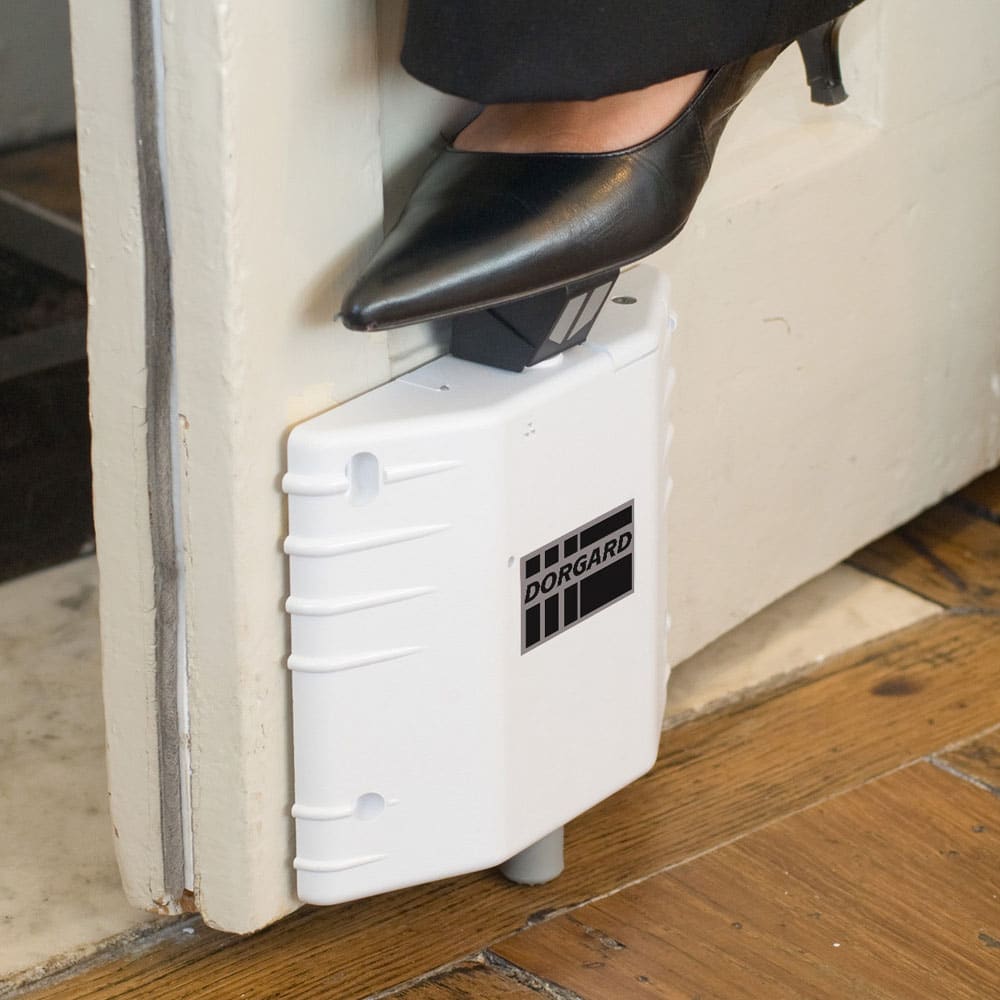 When smoke alarms activate, they should also trigger the closing of bedroom doors to protect occupants from smoke via door hold-open devices in conjunction with door closers.
I am not suggesting the added expense of installing a Fire Indicator Panel/Fire Brigade Alert is required to incorporate door releases to close bedroom doors. But a higher level of protection other than sprinklers is required for occupant safety.
Already in use in the United Kingdom and throughout Europe, Dorgard is a door-hold-open device that activates when smoke alarms are triggered. These offer the perfect solution for improving survivability in fire whilst not creating a significant increase in the provision of SDA, including ongoing maintenance.
Unfortunately, these types of devices cannot be used in Australia because our building regulations lack a criterion for assessing them. Our building standards must be more flexible to recognise other jurisdictions’ approved products; we are restricting the rollout of safety.
Whats Next
The 2024 tribunal judgement establishes an expected standard for building professionals. SDA enrolled under the NDIS must prioritise participant safety by applying the correct Class 3 residential care classification. Building surveyors, certifiers, designers, architects, and developers must ensure SDA’s fully meet the prescriptive requirements of the Building Code of Australia, regardless of contradictory NDIS SDA Rules that will compromise life safety.
State and territory regulators must also urgently issue practice notes for building surveyors and certifiers on the approval process for SDA as well as finalise and adopt the proposed Class 1c classification. A carefully designed Class 1c framework will preserve critical fire safety outcomes, including residential fire sprinkler protection, while reducing unnecessary compliance costs for small-scale SDA developments. The Orfali decision has clarified the legal position; the next step is to implement a practical, nationally consistent classification that protects participants while supporting the delivery of safe and affordable SDA housing.
Additional Posts on the topic of Fire Safety
- 2026 A Tragic Spring Farm Fire and the Imperative for Stronger Safety Frameworks in Disability Housing
- 2025 Is the Fire Safety of NDIS Participants Being Compromised
- 2024 Disability Fire Safety Forum: Specialist Disability Accommodation
- 2023 Why the SIL, STA, MTA or SDA Accommodation you’re Providing may be Operating Illegally
- 2023 Understanding an organisations Liability and Risk providing Fire Safe SDA & SIL
- 2021 SDAs Must Have Sprinklers
- 2020 The Failures of SDA and Fire Safety
- 2020 Making Emergency Management Compliance of SDA’s Simple
- 2019 Fire Safety for Specialist Disability Accommodation
- 2017 Why your SDA might be a Class 3 and not a Class 1a or 1b