
Our Access Audit service using Access Check can provide an examination of a building and its facilities or the external built environment against a pre-determined criterion to assess the ease of use by people with a disability. Guidelines are from the suite Australian Standards AS1428, Building Control Act and the Disability Discrimination Act.
What Is Access Check?
Access Check is an industry-leading audit and assessment application that is cloud-based and can be run on Windows or Mac computers but can also be run on Android and ios tablets for onsite access audits. This has been developed specifically for Disability Access compliance and includes modules that can be used on all parts of the built environment.
- Commercial, retail, healthcare, aged care, hospitality, entertainment and industrial projects
- Residential developments including mixed-use developments.
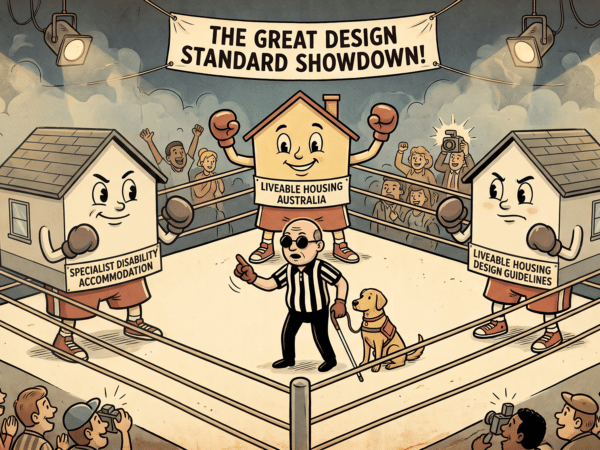
- Specialist Disability Accommodation assessments
- Changing Places
- Livable Housing Australia assessments
- External built environments
- Disability Standards for Accessible Public Transport
What Is Covered In An Access Audit?
 All DDA access audits undertaken by Equal Access pay great attention to ‘Reasonable Adjustment’. Only an Access Auditor can decide what is reasonable or unreasonable for you to be expected to undertake. Equal Access believes that this audit approach will save you money in the long run by recommending what is reasonably expected of you to comply with the Disability Discrimination Act 1992.
The reasons for carrying out an Access Audit are to help meet the legislative requirements of the DDA 1992 and improve disability access and egress and in turn increase your custom and turnover, as well as help, protect you from claims of disability discrimination. It is necessary to carry out an Access Audit to establish what action is needed.
 A written DDA Access Audit report will then be produced. This access report will detail ways in which non-compliance exists and recommend a course of action. Photographs within your report will identify areas on non-compliance. Priorities will be given to work recommended. Some items (Especially Occupational Health & Safety issues) may need to be carried out immediately whereas other items could be added to the regular maintenance program of your building. Some larger items may need to be included in a feasibility study undertaken by your organisation.
Equal Access is proud of its level of customer service. We offer telephone assistance to assist you while work is being planned and undertaken. We have a very high level of understanding of many disabilities. Hearing, vision and other sensory impairments along with learning difficulties, ambulant disabilities and physical disabilities must all be considered on equal terms.
Identified Issues
All identified issues are prioritised as follows;
- Safety risk: The issue presents a risk of injury by a building user
- Complaint risk: The issue presents a risk of a complaint by a building user
- Best practice: The issue should be considered for rectification to improve accessibility on the basis of a best practice improvement.
The list below outlines areas which are likely to be audited during our surveys:
- External Environments and Approach – this may include access from site boundaries, vehicle set down, parking facilities, pedestrian routes, public spaces and pathways. Features are likely to include wayfinding, surfaces, ramps, steps, handrails, external lifts, lighting, general safety.
- Doors – vision panels/glazing manifestation, entrance matting, lobby sizes, entry control/security systems, automatic/manual operating systems, safety controls, thresholds, clear widths, closer strengths and door furniture.
- Horizontal Circulation – corridor widths, circulation areas, obstructions, clearance widths, TGSI’s and hazards.
- Vertical Circulation – platform lifts, stair lifts, passenger lifts, control locations, stairs, step nosings, ramps, handrail profiles and pitch heights.
- Facilities – reception desks, information, communications, seating, refreshment and vending areas, sports and leisure facilities, classrooms, interactive displays, showcases
- Sanitary Facilities – accessible and general WC’s, sizes, location, fittings, dispensers, doors, alerting systems, shower rooms and wash facilities
- Means of Escape – refuge spaces, accessible escape routes, evacuation arrangements, alarm call points, visual, acoustic and tactile alerting systems
- Lighting – glare control, switch positions and assistive aids
- Acoustics – general quality, reverberation, assistive equipment
- Finishes – walls, ceilings, decor, light reflectance, contrast, absorbency, floor finishes, slip resistance, visual/tactile properties
- Fixtures – display of notices, clarity and simplicity of information to meet the widest possible range of diverse user needs, collections and exhibits
- Wayfinding – signage, pathways, tactile ground surface indicators, tactile/audio maps
- Information/communication – telephones, videophones, inductive couplers, textphones, sound enhancement systems, induction loops, infrared, radio, TV/video, PA systems
Key Access Audits Completed
- Melbourne University (multiple campuses including Rural Health)
- Deakin University Access audit program of 98 buildings at 4 campuses city and regional
- RMIT University Access audits – City, Carlton, Bundoora & Brunswick campuses
- Charles Darwin University – Casuarina and Palmerston campuses.
- City of Casey – All Abilities Building Accessibility Audits (multiple Community Centres, Halls and Learning Facilities)
- Liverpool City Council – Accessibility Audits Parks and Recreation
- Shire of Broome WA – Access and Inclusion facilities audits
- Shire of Wyndham East Kimberley WA – Shire facility audits
- Centrelink Offices – Multiple locations, Australia wide
- National Gallery Australia (Canberra)
- National Library of Australia (Canberra)
- Gallery of First Australians (Canberra)
- Museum of Australian Democracy (Old Parliament House) Canberra
- National Museum of Australia (Canberra)
- Bega, Tatura Milk Industries multisite
- Unilever – Tatura, Minto and North Rocks
- Surf Coast Shire – All Abilities Facilities Audit
- Melbourne Concert Hall, State Theatre & Myer Music Bowl
- Court Services Victoria – Supreme Court, Melbourne, Magistrates Court Melbourne and Victorian Regional Courthouses.
- Jones Lang LaSalle – DHS sites in Victoria, NSW and TAS
- Australian Embassy Tokyo Japan – DFAT
- Melbourne Water – 22 water & sewerage office/processing facilities.
- City of Greater Dandenong – 180 community buildings
- Shire of Nillumbik –108 community buildings
- City of Kingston – 76 community buildings
- City of Port Hedland –61 community buildings
- Hume City Council – 44 community buildings
- Northern Territory Airports – Darwin International and Alice Springs airports
- Mindil Beach Resort & Casino Darwin